



Runweight
RUNWEIGHT™ – Aircraft Weighing & Balancing System (Trakblaze Indonesia)
For a Safer Take‑Off & Landing | Real‑Time Aircraft Weight & Centre of Gravity Verification
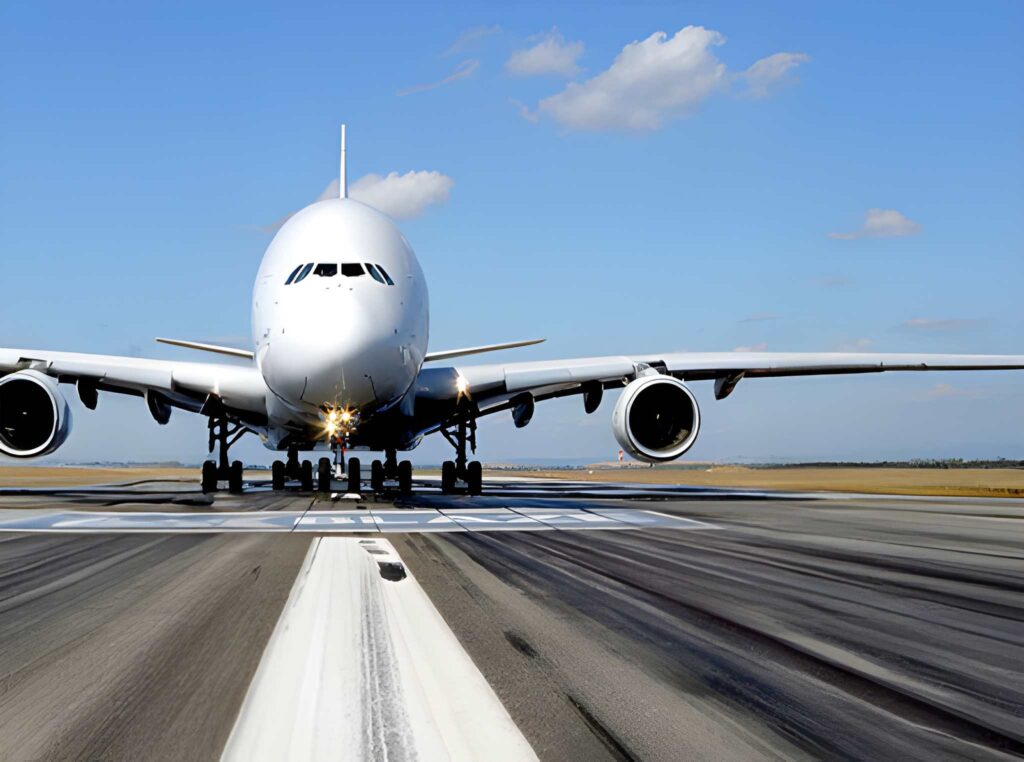
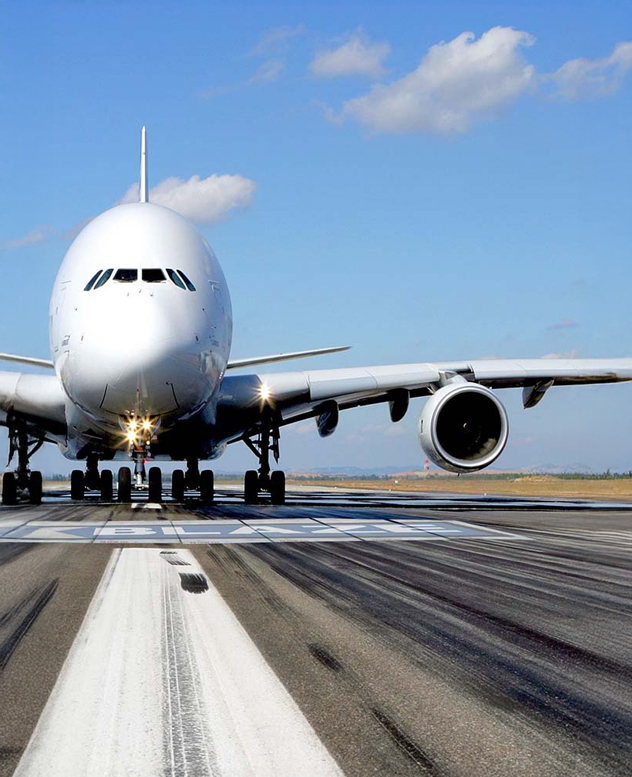
RUNWEIGHT™ is the world’s first integrated aircraft weighing and balancing system designed to provide accurate Total Overall Weight (TOW) and Centre of Gravity (COG) verification before take‑off. Installed directly into an aerodrome apron, taxiway, airline maintenance facility, or military base, RUNWEIGHT™ delivers a revolutionary safety safeguard for global aviation.
This breakthrough technology is engineered in Australia and Germany, built to military‑grade precision, and suitable for all aircraft types up to the Airbus A380.
Why RUNWEIGHT™ Is a Game Changer for Indonesia’s Aviation Industry
- Accurate TOW & COG verification before take‑off
- Reduces human error in weight & balance calculations
- Identifies iced wings
- Detects overloaded or heavy aircraft
- Monitors runway/tarmac damage caused by overweight aircraft
- Detects undercarriage damage, failure or collapse
- Reduces take‑off thrust → lower noise & emissions
- Improves fuel efficiency & reduces engine/brake wear
- Supports compliance with global aviation safety standards
- May reduce insurance premiums
What RUNWEIGHT™ Does
Intelligent, Real‑Time Aircraft Weighing
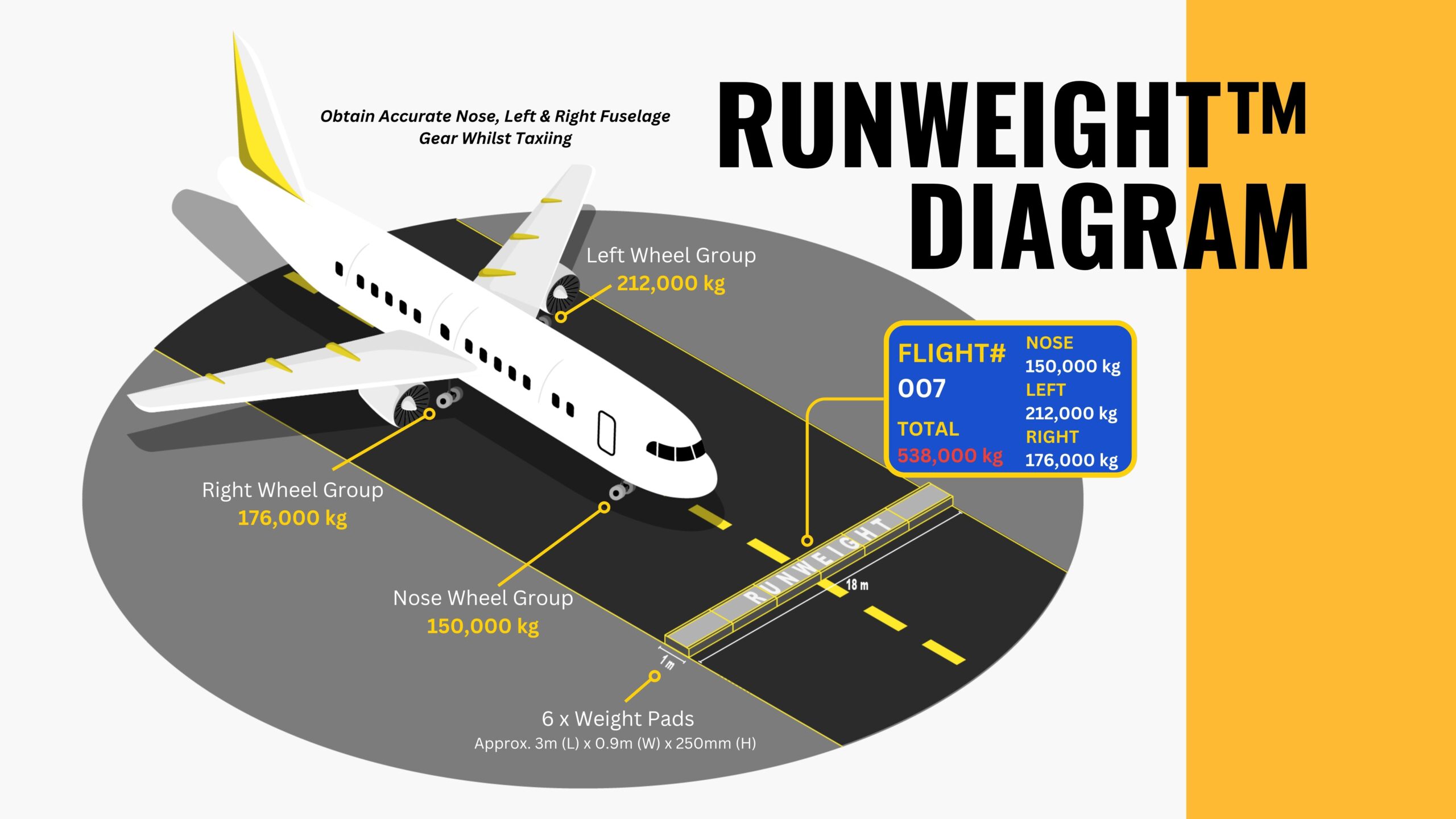
RUNWEIGHT™ uses in‑motion weighing pads embedded into the taxiway or apron. As the aircraft taxis over the system, it automatically measures:
- Nose gear weight
- Left fuselage landing gear weight
- Right fuselage landing gear weight
- Total aircraft weight
- Centre of Gravity (COG)
- Weight distribution
This provides pilots and engineers with one final, accurate cross‑check before take‑off — something the aviation industry has never had until now.
Real‑Time Display Options
- Digital screen mounted beside the apron
- iPad/tablet display inside the cockpit


Why RUNWEIGHT™ Is Required Solving Aviation’s Most Critical Safety Gap
- Human error in weight & balance calculations was a major contributing factor.
- No single system existed to cross‑check TOW/COG before take‑off.
- A procedural cross‑check system was recommended but never implemented.
Preventing Tail Strikes & Balance‑Related Accidents
Tail strikes occur when:- COG is too far aft
- Cargo/passenger loading is incorrect
- Fuel distribution is uneven
Reducing Global Emissions & Fuel Burn
Aviation is one of the world’s highest carbon emitters. RUNWEIGHT™ helps reduce emissions by:- Allowing pilots to use less take‑off thrust
- Preventing unnecessary fuel burn caused by weight overestimation
- Reducing idling time and runway delays
Technical Specifications
| Specification | Details |
|---|---|
| Pad Size | Approx. 3 m (L) × 0.9 m (W) × 250 mm (H) |
| Weighing Range | 0–150 tonnes per pad |
| Load Totalling | Dynamic mode: 6 landing gear groupings |
| Accuracy | Dynamic: 1–3% up to 15–20 km/h; Static: 0.05% per pad |
| Operating Temperature | Controller: 5°C to +50°C; Load cells: –20°C to +60°C |
| Load Cell Protection | IP68 |
| Load Cells per Pad | 4 |
| Number of Pads | Up to 6 |
Benefits for Indonesian Aviation Operators
Improve Flight Safety
Accurate TOW & COG reduces risk of tail strikes, runway excursions & take‑off accidents.
Reduce Fuel Burn & Emissions
Optimised thrust settings save fuel and reduce carbon output.
Lower Maintenance Costs
Less stress on engines, brakes, tyres & undercarriage
Reduce Noise Pollution
Lower take‑off thrust reduces noise impact on surrounding communitie
Increase Operational Efficiency
Faster, more accurate pre‑flight verification reduces delays.
Applications Across Indonesia’s Aviation Sector
RUNWEIGHT™ is ideal for:
- International airports
- Domestic airports
- Airline maintenance facilities
- Military airbases
- Cargo terminals
- Aviation training centres
- Aircraft manufacturing & testing facilities